 2 Dec 25
Static image, motion graphic, or AI video? The right ad format is not a matter of taste, it depends on where in the funnel the ad is working. Here is a simple way to match format to stage.
One of the most common questions we get about ad creative is which format to use: a static image, a motion graphic, or a full AI-generated video. Teams tend to answer it by taste or by whatever is trendy, which is why so much ad spend goes to expensive video that a cheap static would have beaten, or to a flat image where motion was needed to make the point. The format is not a matter of preference. The right choice depends on where in the funnel the ad is doing its work, because each format has a job it does better than the others. Here is a simple way to match them.
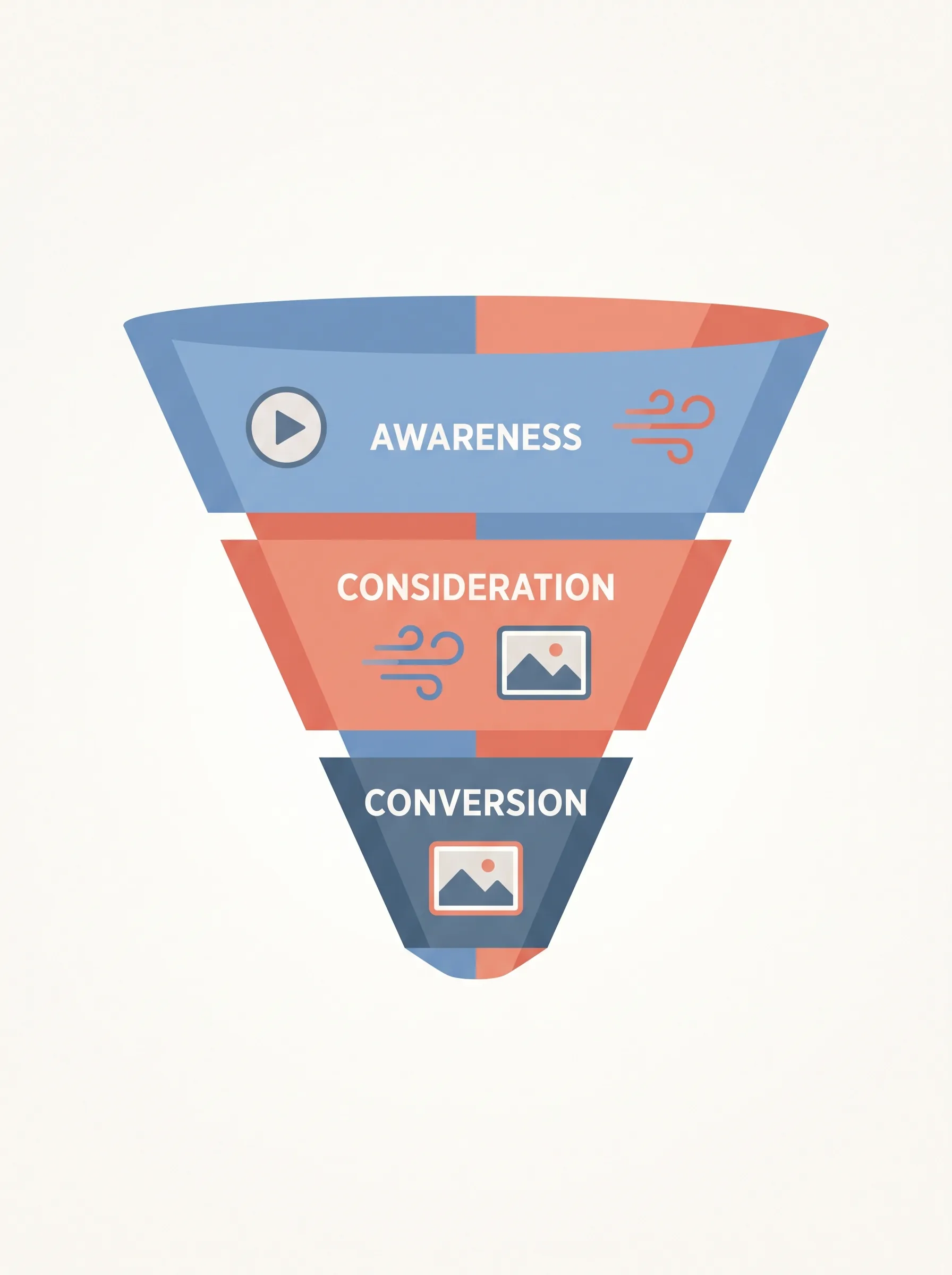
Top of Funnel: Motion and Video Earn Attention
At the top of the funnel, the ad’s job is to stop a stranger who has never heard of you and earn a few seconds of attention in a hostile, fast-scrolling feed. This is where motion and video earn their cost. Movement catches the eye in a way a static frame struggles to, and video has the room to tell a small story, set a mood, or land an emotional hook that makes someone care before they know anything about you. When the goal is reach and attention among cold audiences, the extra production cost of motion or AI video is often justified because attention is the whole battle at this stage and movement wins it.
The caveat is that video only pays off if the first second works. A video with a slow start wastes its own advantage, because the scroll happens before the story lands. Front-load the hook or you are paying video prices for static results.
Middle of Funnel: Motion and Static Explain
In the middle, the audience knows you exist and is weighing whether you are worth their time. The job shifts from earning attention to explaining value, and here the format choice opens up. Motion graphics are strong for showing how something works, a product in action, a process, a before and after that a still image cannot convey. But clear static creative also does real work at this stage, carrying a specific benefit, a proof point, or a comparison that rewards a moment of actual reading. The decision comes down to whether the message needs to move to be understood. If it does, use motion. If a sharp image and a few well-chosen words carry it, static is faster and cheaper and often just as effective.
Bottom of Funnel: Static Usually Wins
At the bottom, the audience is close to deciding, and the ad’s job is to push them over the line with a clear reason and a clear next step. This is where static creative usually wins, which surprises people who assume fancier is always better. Someone ready to act does not need a mood or a story, they need the offer, the proof, and the button, delivered without friction. A clean static ad with a sharp value proposition and a strong call to action often outperforms an elaborate video here, because video asks for time and attention that a ready-to-convert person would rather spend converting. Simple and direct beats produced and slow at the moment of decision.
Test the Choice, Do Not Just Trust the Rule
This mapping is a strong starting point, not a law, because your audience and offer can bend it. The way to know for sure is to hold format up as a variable and test it properly, running the same message as a static and a motion version and letting the numbers on your actual audience decide. That only works if the test is structured to teach you something, which is where proper creative testing frameworks matter: change the format deliberately and measure it cleanly, rather than comparing a great video against a weak static and concluding video wins.
Over time, testing format by stage builds you a real picture of what your audience responds to where, which is worth more than any general rule. The point of the funnel mapping is to start you in the right place so your tests refine a good instinct rather than starting from zero.
The Practical Takeaway
Stop choosing ad format by taste or trend and start choosing by job. At the top, where you are fighting for attention among strangers, motion and video earn their cost. In the middle, match the format to whether the message needs to move to be understood. At the bottom, where someone is ready to act, get out of their way with clean static creative and a clear call to action. Match the format to the funnel stage, test to confirm, and your creative budget goes to the format that actually does the job rather than the one that looked most impressive in the pitch.
If you want your ad formats matched to the job each one has to do, that is exactly the kind of thinking we bring.